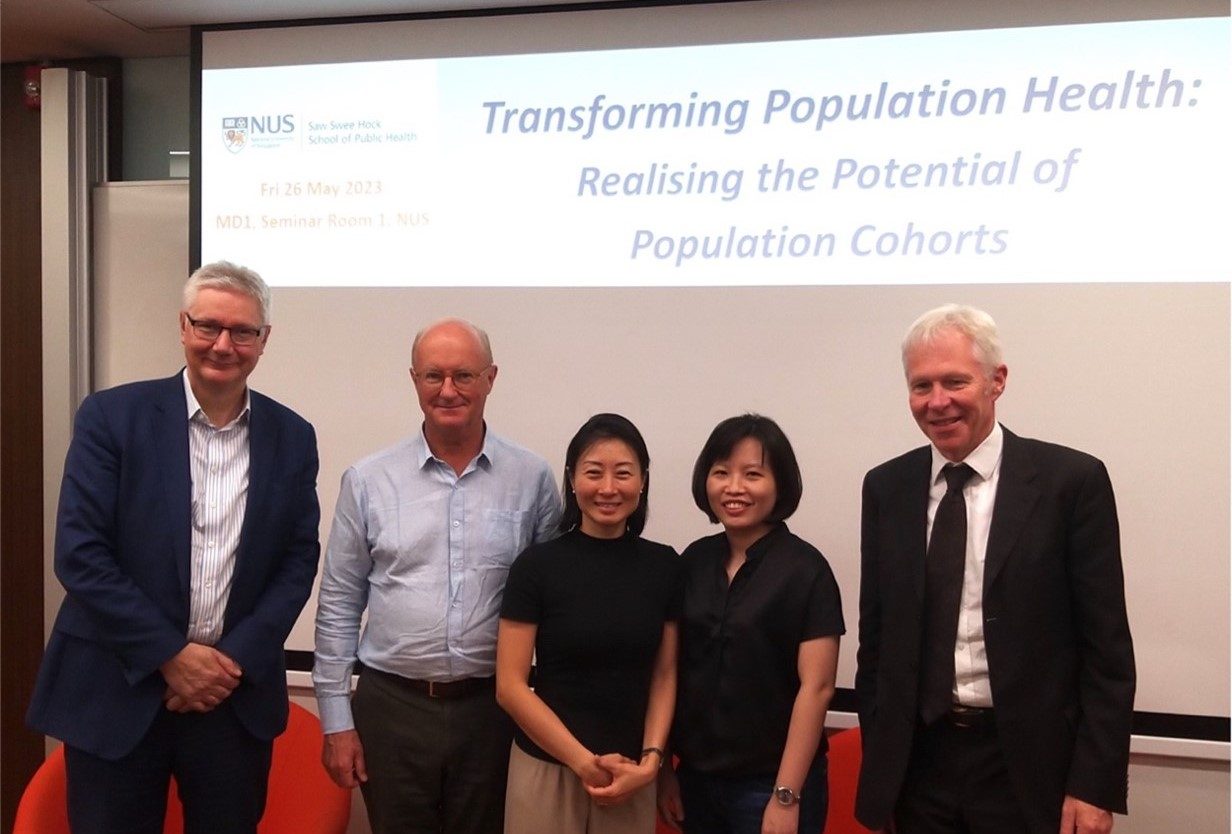
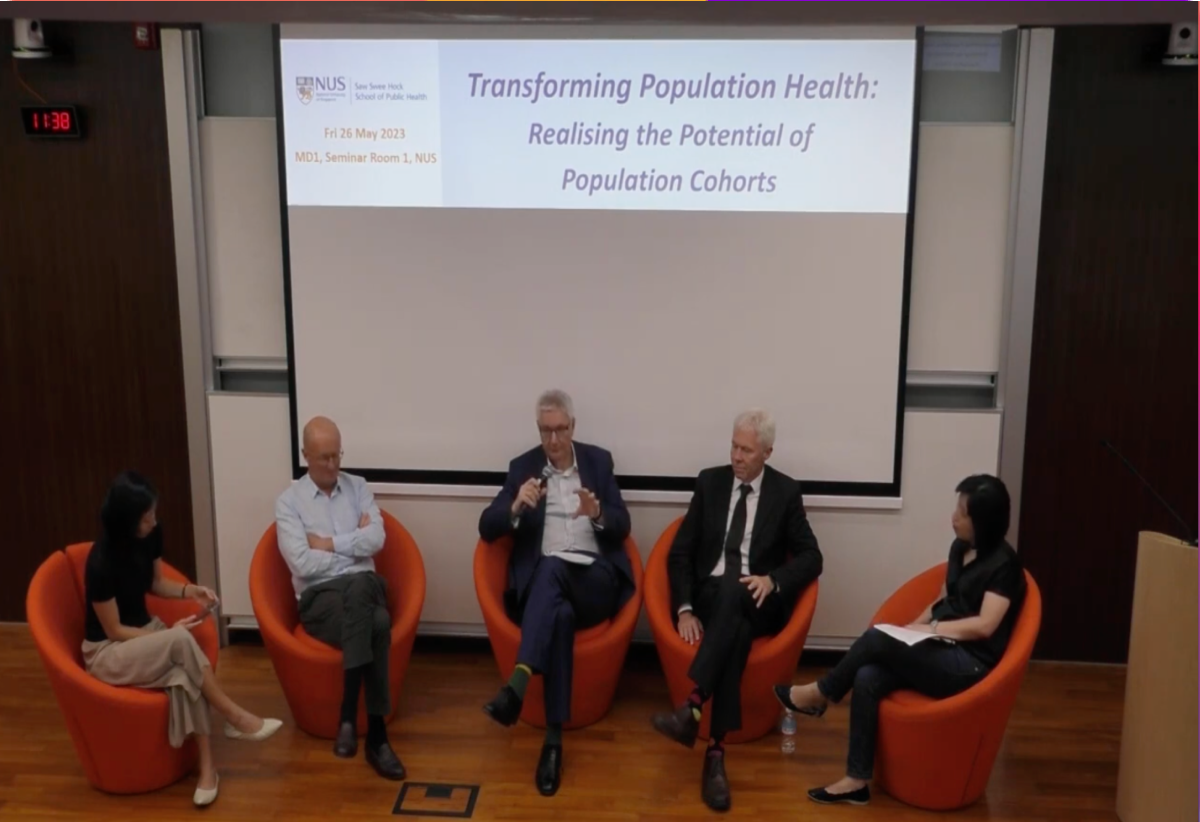
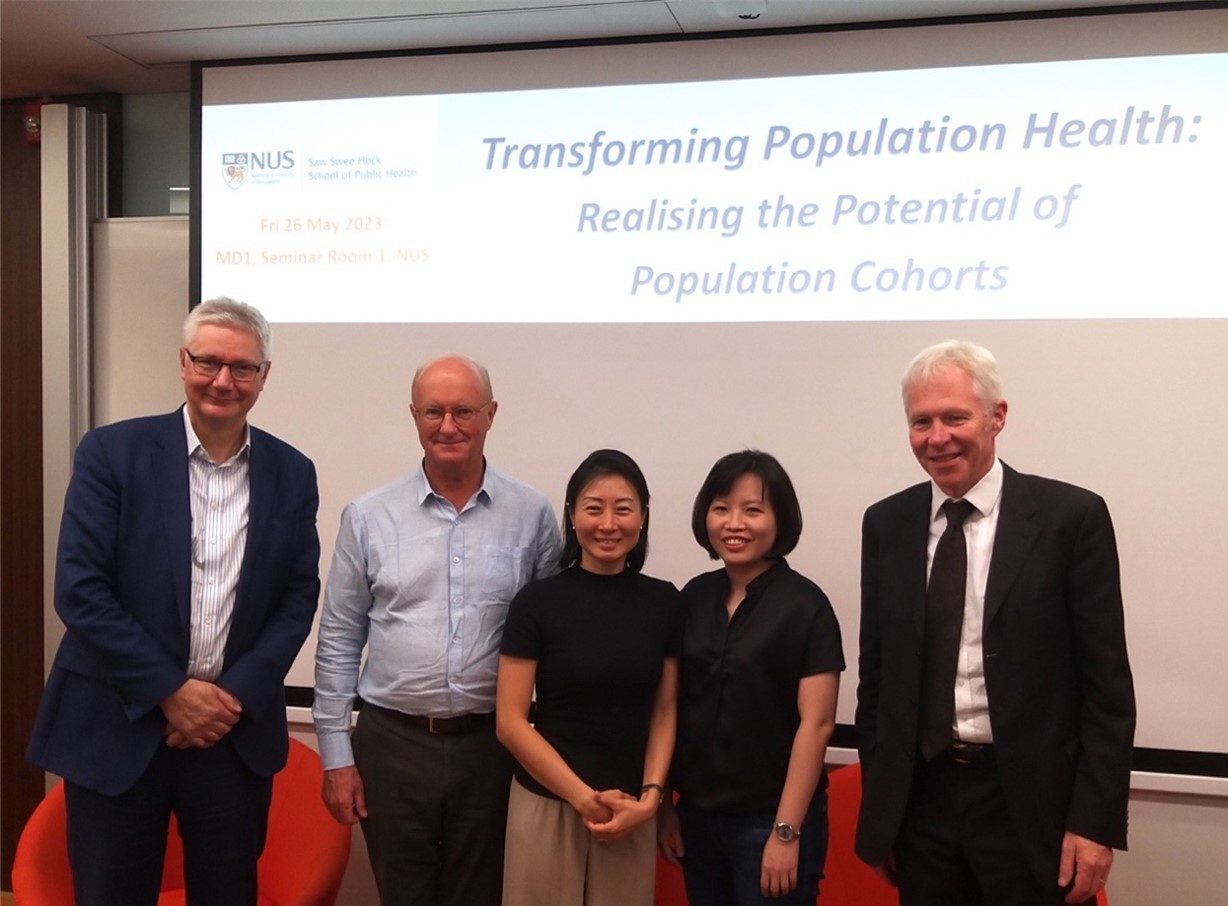
The National Cohorts Office (NCO) is set up to advocate for and facilitate competency building among population cohorts in Singapore.
Population cohorts recruit participants from the general population. They are also called longitudinal studies as they follow people over time. As these longitudinal cohorts are versatile in health outcomes they become a valuable infrastructure for biomedical research and translation. These cohorts would have consent for recontact, linkage and secondary data use.
National Cohorts Office presentation @ SingHealth Duke-NUS AMC Research Council meeting
NCO was invited to give a presentation at the SingHealth Duke-NUS AMC Research Council meeting, held in-person on 26 February 2026. A/P Sim Xueling, Director of NCO, gave a 15 min presentation on what the National Cohorts Office (NCO) does and how researchers may interface with NCO and its initiatives.
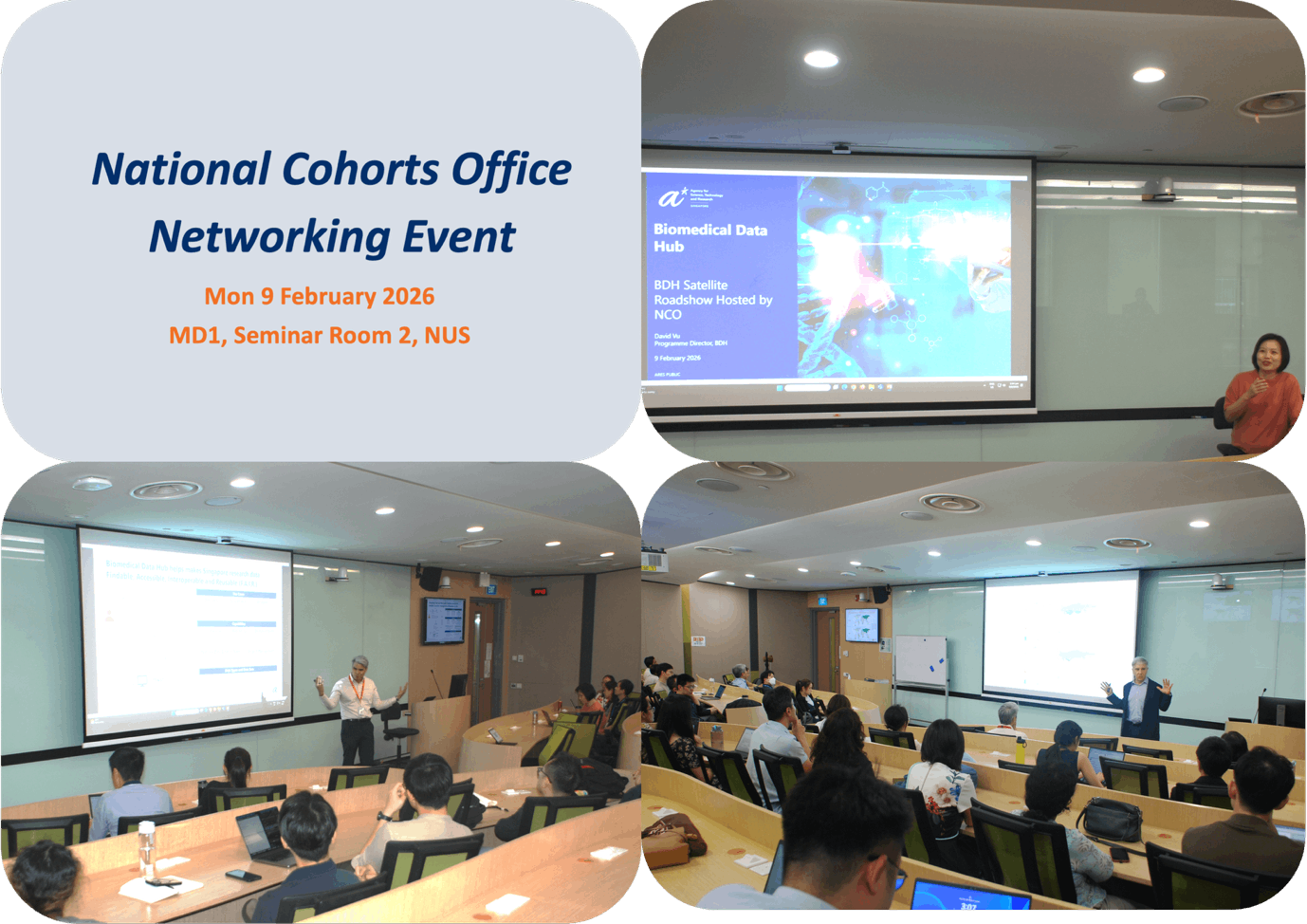
The National Cohorts Office (NCO) invited Professor Majid Ezzati — Professor of Global Environmental Health at Imperial College London, Academic Director of Imperial Global Ghana, and Director of the World Health Organization Collaborating Centre on NCD Surveillance, Epidemiology and Modelling — to deliver a talk on 9 February 2026. Seminar room 2 was full and the audience comprised cohort custodians, their team members, and faculty and staff from the Saw Swee Hock School of Public Health.
The NCD Risk Factor Collaboration (NCD-RisC), the world’s largest data pooling initiative on non-communicable diseases (NCDs), brings together high-quality population-based data and applies advanced statistical methods to generate rigorous, timely estimates for countries worldwide. In his talk, Professor Ezzati highlighted changing trends in cardiovascular diseases and shared examples of how NCD-RisC’s findings illuminate major dynamics and transitions in cardiometabolic conditions globally. He also demonstrated how modelling risk factor interventions can contribute to significant reductions in the burden of NCDs.
The session also included a satellite roadshow by Mr David Vu, Programme Director of the Biomedical Data Hub (BDH), who outlined BDH’s role within the research ecosystem and how it adds value to researchers, particularly in the area of data management.
The event concluded with a networking session over afternoon tea, providing attendees with the opportunity to exchange ideas, ask further questions, and end the day on a high note.